

A mobility scooter can make everyday tasks much easier for someone who has difficulty getting around at home. Medicare Part B may help cover the cost, but approval depends on specific medical and equipment requirements. Knowing what Medicare looks for, how the ordering process works, and what costs may remain can make the coverage process easier to navigate.
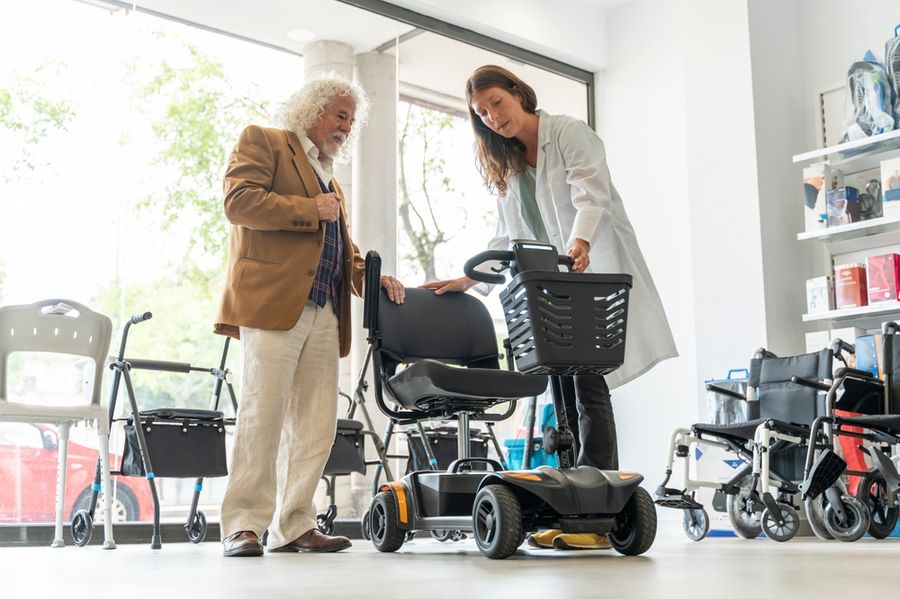
What Medicare Covers for Mobility Scooters
Medicare Part B provides coverage for power mobility devices, including motorized scooters, when a licensed treating provider determines the equipment is medically necessary (source). This coverage falls under the broader category of durable medical equipment (DME), which Medicare Part B addresses alongside items like walkers, hospital beds, and other medically necessary aids.
Importantly, coverage through Medicare extends to both the rental and outright purchase of power mobility devices (source). Whether a beneficiary rents or buys, the same eligibility rules apply. The device must be used primarily in the home or an approved facility for Medicare to consider it covered (source). This is a detail many beneficiaries overlook, as a scooter intended mainly for outdoor recreational use, for example, would not qualify under these terms.
Medical Necessity and the Role of a Treating Provider
A critical step in the Medicare coverage process involves a face-to-face evaluation with a qualified treating provider, followed by a written prescription for the device (source). This requirement exists to confirm that the person genuinely needs a power mobility device to function within their home environment. Simply wanting or preferring a scooter over walking is not sufficient — a documented medical condition that limits the individual's mobility must be established.
The treating provider's documentation plays a significant role in determining whether Medicare approves or denies a request. Thorough and accurate records from the physician or other qualified practitioner are essential for building a successful claim (source). Beneficiaries are encouraged to work closely with their doctors to ensure all medical justifications are clearly captured in the written record before submitting any requests to Medicare.
Prior Authorization Requirements
For certain types of power mobility devices, Medicare requires prior authorization before it will agree to cover the equipment (source). This means that in some situations, a beneficiary cannot simply receive a scooter and then expect Medicare to pay. Approval must be secured in advance. The prior authorization process is designed to confirm that all eligibility and documentation criteria are met before the equipment is provided.
Failing to complete prior authorization when it is required can result in Medicare denying coverage entirely, leaving the beneficiary responsible for the full cost of the device. The Center for Medicare Advocacy notes that prior authorization may be required for certain power mobility devices before Medicare will approve coverage (source). Staying proactive and confirming whether this step is needed can prevent costly surprises.
Cost Sharing and Choosing a Medicare-Enrolled Supplier
When Medicare approves coverage for a mobility scooter, beneficiaries do not receive the equipment at zero cost. Once the Part B deductible has been met, Medicare generally pays 80% of the approved cost, leaving the beneficiary responsible for the remaining 20% when the supplier accepts Medicare assignment (source). This cost-sharing arrangement means the remaining 80% is covered by Medicare Part B, which can represent significant financial relief for those on fixed incomes.
Choosing the right supplier matters just as much as choosing the right device. Beneficiaries should verify that their DME supplier is enrolled in Medicare before proceeding, as working with a non-enrolled supplier can lead to unexpected out-of-pocket expenses (source). Not all medical equipment companies participate in Medicare, so confirming enrollment status upfront protects against unwanted financial liability. A Medicare-enrolled supplier will also be familiar with the documentation and billing requirements needed to process a claim correctly.
Navigating the Process Successfully
The path to Medicare coverage for a mobility scooter involves multiple steps: obtaining a medical evaluation, securing a prescription, confirming prior authorization requirements, and working with an approved supplier. Each stage requires attention to detail and coordination between the beneficiary and their healthcare providers. Missing any single step can delay or derail coverage.
Beneficiaries who are proactive — communicating clearly with their doctors, asking questions about supplier enrollment, and following up on authorization status — tend to experience fewer obstacles in the process. Medicare's rules around power mobility devices are designed to ensure that coverage reaches those who truly need it, and understanding those rules positions beneficiaries to make the most of the benefits available to them.
Why You Should Learn More About Medicare Mobility Scooters Today
Medicare coverage for mobility scooters represents a meaningful financial and practical benefit for eligible Americans living with limited mobility. The coverage framework through Part B encompasses both rentals and purchases, but requires medical necessity documentation, possible prior authorization, and a Medicare-enrolled supplier. Cost-sharing obligations still apply, with beneficiaries responsible for 20% after meeting their deductible.
Those who take the time to understand each requirement, from the initial face-to-face evaluation to supplier selection, are far better positioned to access coverage without unexpected costs or denials. Staying informed about Medicare's mobility device policies can directly impact quality of life for those who depend on this equipment every day.
Sources
Official Medicare.gov page on power wheelchair and scooter coverage under Part B
Center for Medicare Advocacy tips on power mobility device coverage and documentation