

There’s an awkward stretch in many kitchens that rarely gets much attention, even when the rest of the room has been carefully styled. Leaving it untouched can work, but the right approach can give the kitchen more character without changing the cabinets themselves. A few thoughtful choices can turn that forgotten area into part of the overall design.
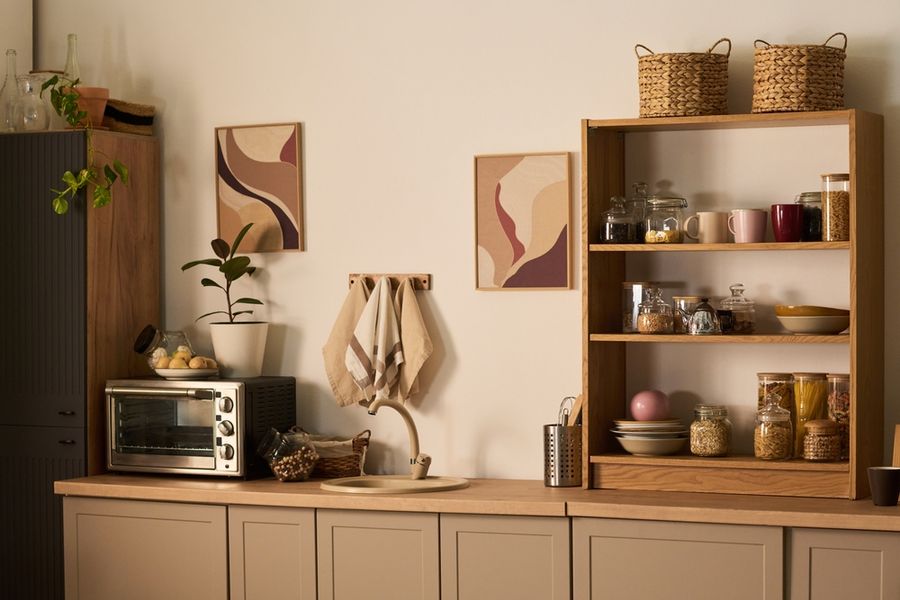
Why the Space Above Kitchen Cabinets Deserves Attention
Many homeowners treat the gap between cabinet tops and the ceiling as dead space, using it for infrequently accessed storage or leaving it bare entirely. In reality, this vertical zone is a powerful design opportunity. When styled thoughtfully, items placed above kitchen cabinets draw the eye upward, which can make even a small kitchen feel significantly more spacious and finished (source). The key lies in approaching the space with the same intention applied to any other surface in the room.
Interior designers consistently point to this area as a place where personality can shine without overwhelming the functional layout below. A curated arrangement above the cabinets signals that the kitchen was designed with care from floor to ceiling, rather than attention stopping at eye level.
Trending Approaches for Above-Cabinet Styling
Vintage ceramics have emerged as a favorite among professional designers working in kitchens of all styles. New York interior designer Megan Pflug advises: "I try to balance style and functionality, as well as ‘cleanability.' ...I look for vintage objects like ceramic vases. They make great storage and can be cleaned easily." (source). Ceramic vases and vessels bring warmth and organic texture to a space that can otherwise feel sterile, and their smooth surfaces make maintenance practical.
Antique and vintage items more broadly are trending as a counter to the overly polished, minimalist kitchen aesthetic that dominated recent years. Designer Samantha Stathis Lynch recommends "incorporating decor with differentiating textures such as an antique wooden cutting board or vintage" items to make the kitchen feel less sterile and more layered (source). Combining rough wood, aged metal, and handmade ceramics in the same arrangement creates visual depth that a single material simply cannot achieve.
Statement sconces and modular wine racks are two functional-meets-decorative options gaining traction for the above-cabinet zone. A wine rack installed above cabinets serves a genuine storage purpose while contributing a distinctive character to the room, transforming an often-neglected surface into something both practical and inviting (source).
Using Artwork, Wallpaper, and Color to Elevate the Look
For kitchens with a pronounced gap between the cabinet tops and ceiling, wallpaper applied in that narrow band can dramatically change the atmosphere of the room. Designer Tom Scheerer used a botanical wallpaper in this zone to unify a green-themed kitchen, demonstrating how a simple patterned surface can serve as both a backdrop and a tying element (source). Even a subtle print adds warmth and intention to a space that might otherwise read as an architectural afterthought.
Artwork is another strong option, particularly in kitchens where cabinet tops sit far below the ceiling. Leaning or mounting a piece above the cabinets introduces color and dimension, and layering smaller objects in front of it adds a sense of depth that flat surfaces alone cannot produce (source). This approach works especially well when the artwork references the kitchen's existing color palette.
Design Principles That Make Above-Cabinet Decor Work
Repetition is one of the most reliable principles for styling this area successfully. Repeating a single design element, whether a collection of plates, matching vases, or a series of candle holders, creates a cohesive visual rhythm rather than a cluttered assortment (source). This approach suits kitchens that already have abundant storage elsewhere, since the display can remain purely aesthetic without doubling as a pantry overflow zone.
Height variation within any arrangement also plays a critical role. Mixing tall objects with lower ones prevents the display from reading as a flat, monotonous line. Combining a tall ceramic jug with a shorter stack of books or a trailing plant, for example, gives the eye multiple points of interest across the horizontal span of the cabinets.
Color coordination with the rest of the kitchen ties everything together. Pulling accent colors from countertops, backsplash tiles, or appliances into the above-cabinet decor creates a sense of intentionality throughout the space. When the upper display echoes what is happening at lower levels, the kitchen feels designed rather than assembled.
Practical Considerations for Above the Cabinet Decor
Maintenance is a legitimate factor when selecting objects for this zone. Everything resting above the cabinets is exposed to the greasy, sticky dust that kitchen cooking generates over time, which means choosing items that can be wiped clean easily is essential (source). Lining the cabinet tops before placing objects makes future cleaning far more manageable and protects the cabinet surface itself.
Weight and stability matter as well, particularly in homes with young children or in earthquake-prone regions. Heavier ceramic or stone objects are best positioned toward the back of the cabinet top, while lighter decorative pieces can sit closer to the edge where they are more visible. Avoiding items with unstable bases reduces the risk of accidents during cleaning or when cabinet doors are opened and closed repeatedly.
Seasonality offers another practical reason to keep above-cabinet arrangements somewhat flexible. Swapping out a few pieces for seasonal items, such as trailing greenery in spring or warm-toned vessels in autumn, refreshes the kitchen without requiring a full redesign.
Why You Should Learn More About Kitchen Cabinet Decorating
Above-cabinet styling represents one of the most accessible ways to elevate a kitchen's overall design without renovation. Whether the preference leans toward vintage ceramics, curated artwork, or botanical wallpaper, the principles of texture, repetition, and color cohesion apply universally.
Understanding how professional designers approach this overlooked zone, from selecting cleanable materials to creating balanced arrangements, gives homeowners the knowledge to make confident, lasting choices. Exploring kitchen cabinet decorating further opens up a world of creative possibilities that can transform the entire feeling of the most-used room in the home.
Sources
Elle Decor's expert-backed ideas for styling above kitchen cabinets
Emily Henderson's practical approach to above-cabinet decor and design principles